
Why Innocent until Proven Guilty
Constitutional Rights Aren't "Technicalities"

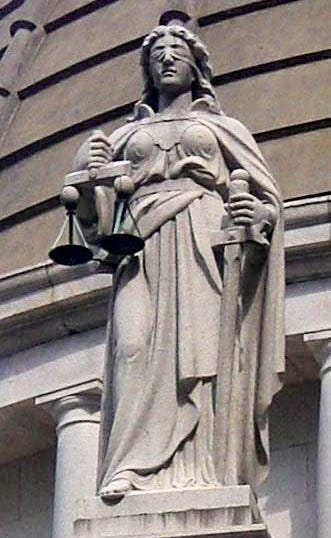
More than thirty years ago, on December 6, 1991, four teenage girls were murdered at a yogurt shop in Austin, Texas. One was raped, and all the bodies were set ablaze. The crime occurred just after closing time. Two of the victims were employed there. Four teenage boys were identified as suspects by Austin police after one of them, who owned a handgun the same caliber as a pistol used in the crime, gave information seeming to implicate all of them. More thorough questioning indicated his statements were unreliable. Indeed, before long, over 50 other people falsely confessed to somehow being involved in the highly publicized murders. The four boys were released.
A few years later and after following up many other false leads, Austin police scooped up and further interrogated the four initial suspects, some of whom implicated all of them in the crime. Suspects Robert Springsteen and Michael Scott were tried and convicted of murder over twenty years ago. The only direct evidence of their involvement was the statements they made to police; each defendant’s own statement and the statements taken from the other suspects, even though they did not testify in court and thus could not be cross-examined. Both Springsteen and Scott were sentenced to life in prison.
After years in prison, Springsteen’s and Scott’s convictions were reversed on appeal by the Texas Court of Criminal Appeals because Springsteen was convicted based on a statement from Scott that he was not able to cross-examine, and Scott’s conviction was based on a statement from Springsteen that Scott was not able to cross-examine. The 6th Amendment to the U.S. Constitution, the court held, required this result because it guarantees all of us the right “to be confronted with the witnesses against” us and to cross-examine them.
Some people will read this and think: “There go two more criminals set free on a technicality,” but there is more to the story. Reversal of the initial convictions only granted Springsteen and Scott new trials—another chance to be convicted by another jury. But there will be no more trials. Just a few days ago, as a result of advances in DNA technology, Austin police discovered that the real murderer was a now-deceased known serial killer named Robert Eugene Brashears. The Austin district attorney stated that the “overwhelming weight of the evidence points to the guilt of Robert Eugene Brashears and to the innocence of…Michael Scott [and] Robert Springsteen…”1
Our constitutional rights are much more than annoying technicalities. Our forefathers designed them to ensure justice, even though it sometimes comes slowly and only after much suffering.
Austin Sanders and Tony Plohetski, “Truth about Killings ‘a Long Time Coming’,” San Antonio Express-News, 30 September 2025.
Either the incompetence of the police, or the stupidity of the witnesses is horrific. How can such an evil doing go without some amount of clarity in what happened and who was involved?